When warm, humid air settles over Indiana, thunderstorms fire up fast. That is why spring and summer are the peak months for dangerous cloud-to-ground lightning. If you want reliable, year-round protection before the storm cycle ramps up, talk to Hamilton Lightning Protection about a professionally engineered system and schedule lightning rod installation ahead of the first big fronts of the season.
From Indianapolis and Carmel to Fishers, Noblesville, and Greenwood, our region sits where warm Gulf air collides with cooler air from the Plains. That recipe fuels frequent thunderstorms, especially on afternoons when temperatures spike. Outdoor events, construction schedules, and longer daylight hours also put people and property in harm’s way more often.
A complete system gives lightning a preferred path to ground, away from people, roofs, framing, wiring, and electronics. For homes in Indianapolis neighborhoods like Meridian-Kessler, Broad Ripple, and Franklin Township, as well as suburban areas in Westfield, Zionsville, Avon, and Brownsburg, that controlled path greatly lowers the risk of fire and hidden damage.
Here is what a professionally built system typically includes:
Do not rely on power strips alone. Plug-in surge bars can help with minor spikes, but a near or direct strike can overwhelm them. True resilience comes from a bonded, grounded system designed as a whole.
Every year, the first string of warm fronts brings fast-building storms across Central Indiana. Waiting until peak season can mean delayed scheduling when crews are busiest. Taking action in late winter or early spring gives you more flexibility and helps ensure your home, barn, or commercial site in Indianapolis, Indiana is protected before the most active weeks hit.
For commercial properties in places like the North Meridian corridor, Castleton, and Park 100, downtime adds up quickly. A complete system reduces risk to rooftop units, data closets, and production lines so operations keep moving when afternoon storms roll through.
Lightning does not need a bullseye to do harm. A strike to a nearby tree in Westfield or a utility pole in Lawrence can cause sudden surges that arc into your home’s wiring. Roof penetrations, solar arrays, metal gutters, and tall architectural peaks increase exposure if they are not properly bonded and grounded.
Hidden effects often show up later as tripped breakers, failing appliances, or data loss. In older homes with additions or mixed roofing materials, differences in height and conductivity can create uneven paths that invite side-flash without proper bonding.
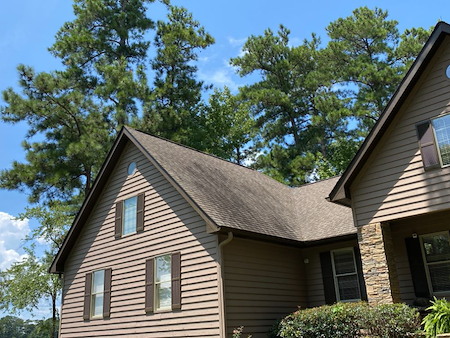
Two-story homes with steep gables in Carmel and Zionsville, lakefront properties with exposed ridgelines, and farmhouses with nearby silos or barns share a similar risk profile. A system tailored to your roofline and site features protects the main structure and can be extended to outbuildings, cupolas, and pergolas where needed.
Never attempt DIY lightning rod work. Placement, bonding, and grounding details are critical and vary by structure. A small mistake can leave gaps in coverage or create a new hazard. You want a system designed and installed by experienced specialists who work to recognized national standards and best practices.
Whether you manage a distribution center near Plainfield, a medical office in Greenwood, or retail along Keystone, your risk goes beyond the roof. A strike can interrupt point-of-sale, damage refrigeration, and knock out building controls. For many sites, the biggest cost is lost time. A complete system, paired with surge protective devices at key panels and sensitive equipment, helps keep doors open and schedules on track when summer storms are most active across the South and East Coast and right here in Indiana.
Most homes and low-rise buildings in Indiana benefit from protection, especially if you have:
• A tall or complex roofline with dormers or multiple peaks
• Metal roofing, solar panels, rooftop HVAC, or a chimney higher than the ridge
• Mature trees close to structures, barns, or detached garages
If any of these sound familiar, it is smart to schedule a professional assessment before frequent afternoon storms arrive. Many homeowners start their research at our lightning protection systems in Indiana hub, then request a site visit for a clear plan and timeline.
Local weather knowledge matters. Our team understands how fast spring and summer cells form along common boundaries and how that affects roof layouts from Speedway to Noblesville. We design systems that consider your exact roof materials, equipment, and nearby structures so the strike path is predictable and safe.
Have your system reviewed after major roof work. New shingles, gutters, or solar can change how components bond and route. A quick check keeps your coverage continuous before storm season ramps up again.
After a site assessment, your crew will map air terminal placement, plan conductor routing that blends with your architecture, and verify robust grounding. The process is coordinated with roofing and electrical professionals as needed, then followed by quality checks and documentation for your records. Your result is a clean, discreet system designed to protect the structure and help safeguard critical electronics when storms sweep across Indiana.
Many homeowners in Indianapolis, Indiana choose to upgrade surge protection during the same project. That coordination helps ensure service panels and sensitive equipment get layered protection matched to your system design.
Do not wait for the first big storm watch. Spring and summer calendars fill fast, and fast-moving cells do not give much warning. A proactive plan beats a reactive repair every time.
When warm, humid air settles over Indiana, thunderstorms fire up fast. That is why spring and summer are the peak months for dangerous cloud-to-ground lightning. If you want reliable, year-round protection before the storm cycle ramps up, talk to Hamilton Lightning Protection about a professionally engineered […]
Spring and summer in Central Indiana bring fast-moving storms, booming thunder, and frequent lightning. A complete lightning protection system gives that energy a safe path away from your house so it does not ignite the roof, split rafters, or fry your electronics. If you want a […]

